Pakistan produces over 30,000 IT graduates every year, yet employers across Lahore, Karachi, and Islamabad consistently report struggling to find candidates who can actually do the work on day one. The gap is not talent. It is training.
If you are searching for the best IT courses for beginners in Pakistan, the answer is not the longest program or the most recognized brand name. It is whichever course puts real tools in your hands from week one.
Most beginners spend months in classrooms learning concepts they will never apply, while the market moves toward AI automation, no-code tools, and project-based skills that can generate income within weeks.
The difference between a beginner who lands a freelance client in two months and one who is still watching tutorial videos after six months usually comes down to one thing: whether their training was built around doing or just knowing.
Key Takeaways
- Pakistan's IT export target for 2026 is $5 billion, creating real demand for skilled freelancers and in-house tech talent across every major city.
- Beginners get hired faster when they learn tools employers are actively using, such as AI chatbots, GHL, WordPress, and Shopify, not just programming theory.
- Course length is less important than course structure. An 8-week practical program consistently outperforms a 6-month theory-heavy course in employment outcomes.
- AI-related skills (automation, chatbot building, prompt engineering) are no longer advanced topics. They are beginner entry points with high freelance earning potential in 2026.
- The right beginner course should include a portfolio project, mentorship, and real-world tools from week one, not week twelve.
Table of Contents
- 2026 Pakistan IT Job Market: Which Skills Actually Pay
- Best IT Courses for Beginners in Pakistan at a Glance
- 8-Week Project-Based Training vs. 6-Month Theory Courses
- Beginner Tools You Should Actually Learn in 2026
2026 Pakistan IT Job Market: Which Skills Actually Pay
2 billion in 2026, and the skills driving that number are not the ones most beginner courses teach. " The salary gap between skill sets is significant and growing.
| Skill | Monthly Salary (Lahore) | Freelance Potential (USD/month) |
|---|---|---|
| AI Automation Specialist | Rs. 80,000 – 150,000 | $500 – $1,500 |
| Shopify Store Developer | Rs. 60,000 – 100,000 | $400 – $1,200 |
| WordPress Developer | Rs. 40,000 – 70,000 | $300 – $800 |
| GHL Automation Expert | Rs. 70,000 – 120,000 | $450 – $1,300 |
| Generic Web Developer | Rs. 30,000 – 50,000 | $150 – $400 |
The difference between the top and bottom rows is not years of experience. It is the specificity of what you can build on day one.
The Pakistan Freelancers Association 2026 Report found that IT freshers who completed practical, project-based training landed their first freelance client within three months at rates far exceeding the 15% conversion rate recorded among graduates of theory-heavy courses.
The common thread among successful early earners: they had a portfolio of real deliverables, not just a certificate. pk/blogs).
The skills commanding attention in 2026:
- AI chatbot development for local businesses replacing manual customer support
- Shopify store creation as Pakistani e-commerce adoption accelerates
- GHL automation for marketing agencies scaling their client operations
- WordPress development with a focus on client-ready site delivery, not just coding basics
- Practical SEO training paired with web development for higher-value client packages
Rozee.pk data shows a clear shift: listings increasingly specify tool proficiency over academic background. A fresh graduate who can configure a working AI chatbot or launch a Shopify store from scratch gets shortlisted. One who lists "HTML, CSS, JavaScript basics" does not. The market has moved, and training needs to match it.
Best IT Courses for Beginners in Pakistan at a Glance
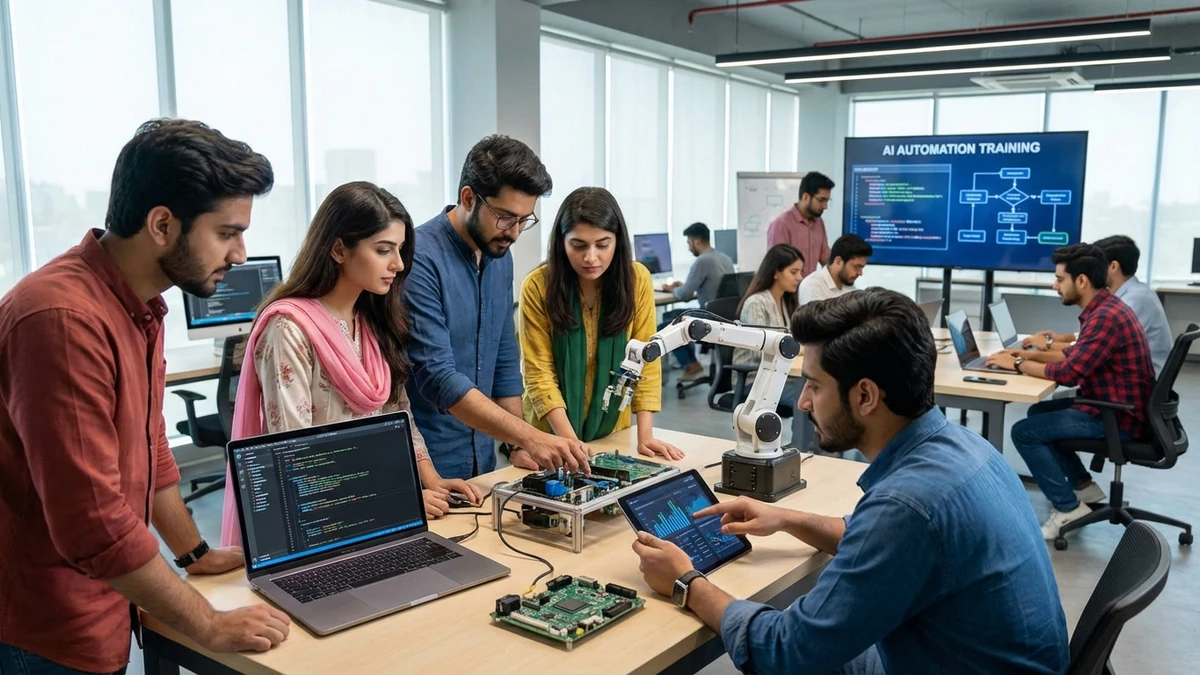
Choosing the right beginner tech course in Pakistan comes down to three factors: time to employability, tools you actually learn, and whether someone holds you accountable. The table below compares the most relevant options for new learners right now.
| Course Type | Duration | Key Tools Covered | Avg. Starting Salary (PKR) | Freelance-Ready | Mentorship |
|---|---|---|---|---|---|
| AI Automation Training | 8 weeks | Make.com, Zapier, GHL | 80,000–150,000/mo | Yes | 1-on-1 |
| AI Chatbot Training | 8 weeks | ChatGPT API, Voiceflow, GHL | 70,000–130,000/mo | Yes | 1-on-1 |
| Shopify Store Creation | 8 weeks | Shopify, DSers, Canva | 60,000–120,000/mo | Yes | 1-on-1 |
| WordPress Development | 8 weeks | WordPress, Elementor, WooCommerce | 50,000–100,000/mo | Yes | 1-on-1 |
| Vibe Coding Training | 8 weeks | Cursor AI, GitHub, Replit | 90,000–160,000/mo | Yes | 1-on-1 |
| Generic Coursera/Udemy | 3–6 months | Varies widely | 30,000–60,000/mo | Partial | None |
| DigiSkills.pk Programs | 3–6 months | Basic tools, theory-heavy | 25,000–50,000/mo | Limited | None |
A few patterns worth noting:
- Practical 8-week programs consistently produce faster employment outcomes than 6-month theory-based tracks.
- DigiSkills.pk reports completion rates below 20% for most cohorts, a predictable outcome for self-paced programs without structured accountability.
- Coursera and Udemy certificates carry limited weight with Pakistani clients and employers unless backed by a portfolio of real work.
The salary ranges above reflect 2026 market rates for entry-level freelancers and junior hires in Lahore and remote positions across Pakistan. AI-related skills sit at the higher end because demand is outpacing supply.
Every course in the top five rows offers both Lahore in-person sessions and nationwide online access, so students in Karachi, Islamabad, and Faisalabad can complete these programs fully online without compromise.
Skill Mentor's curriculum is built on 100% practical, job-ready training in modern tech stacks like AI, Shopify, and GHL with 1-on-1 career mentorship, specifically designed to close the accountability and portfolio gaps that generic online platforms leave open. Browse student success stories to see what that looks like in practice.
8-Week Project-Based Training vs. 6-Month Theory Courses
A 6-month course that ends with a certificate but no deployable project leaves you exactly where you started. Employers and freelance clients in Pakistan do not ask for certificates. They ask for work samples.
Think of it like a tailor who has studied stitching theory for six months but has never cut a single piece of fabric. No client is handing them a suit order.
Here is what a structured 8-week practical path actually looks like:
- Weeks 1–2: Tool setup and environment configuration (Shopify admin, GHL dashboard, or AI automation tools depending on your track)
- Weeks 3–4: Core skill building with guided mini-projects, such as mapping a basic GHL automation workflow for a local service business
- Weeks 5–6: Client-simulation work, such as building a complete Shopify store for a Lahore-based clothing retailer with product pages, payment setup, and mobile optimization
- Weeks 7–8: Final deliverable refined for your portfolio, with mentor feedback before submission That final project is what gets you hired. Not the hours logged.
Why free platforms have a dropout problem
pk offer real value in terms of accessibility, but their completion rates tell the full story. Without fixed deadlines, 1-on-1 accountability, or project briefs that mirror actual client work, most learners stall by week three.
There is no one to flag that your Shopify product description is weak or your automation trigger is misconfigured. Self-paced learning works for highly disciplined learners; for most beginners, it is a slow road to nowhere.
Building a portfolio that Lahore employers actually respond to
pk and filter for entry-level digital marketing or e-commerce roles. Read what skills appear across five consecutive job listings. Build your portfolio project around exactly those requirements. This reverse-engineering approach removes guesswork from portfolio planning entirely. Local Shopify store owners in Gulberg or DHA Lahore are another overlooked resource.
Many small retailers need basic optimization work, and offering a free audit or a small paid project builds real experience faster than any sandbox exercise.
Pro tip: Your first portfolio project does not need to be perfect. It needs to be real. A live Shopify store, a deployed chatbot, or a working GHL automation sequence tells a client far more than a course certificate ever will. If you want to see the full course structure and what week-by-week training looks like, contact our team before the next cohort fills up.
Beginner Tools You Should Actually Learn in 2026
Most beginner course lists push the same outdated tools. The market in 2026 has shifted, and the tools Pakistani freelancers and agencies are actually hiring for look quite different from what was popular three years ago. For a deeper breakdown of AI automation training for beginners, the patterns are consistent: tool-specific training outperforms general programming theory every time.
GoHighLevel (GHL): No Longer Just for Experts
GHL is an all-in-one marketing automation platform that handles CRM, email campaigns, landing pages, and client reporting in a single dashboard. Lahore-based digital marketing agencies are adopting it fast because it replaces five separate tools with one subscription.
A focused beginner can get client-ready with GHL in four to six weeks by building real automation workflows rather than sitting through theory lectures. The demand is there; the trained people are not. pk/gohighlevel) path looks like before committing to a course.
AI Chatbots: Solving Real Pakistani Business Problems
Building AI chatbots has immediate, local applications that pay well:
- WhatsApp automation for small retailers in Lahore and Karachi handling customer queries at scale
- Lead generation bots for real estate agents, clinics, and coaching academies collecting inquiries 24/7
- E-commerce customer service bots for local Shopify and Daraz stores reducing support costs
A basic AI chatbot project for a local business can command Rs. 25,000 to Rs. 50,000 as a one-time setup fee, with monthly retainers on top. That is a viable income stream for a beginner who completes a focused 8-week program and starts pitching local businesses immediately after.
Vibe Coding: Building Web Projects Without a CS Degree
pk/vibe-coding) uses AI-assisted development tools to help non-programmers build functional websites and web apps. You describe what you want, the AI generates the code, and you learn to direct and edit it intelligently.
It is a genuine entry point for students who want to build real products without spending a year learning syntax first. Tools like Cursor AI, GitHub, and Replit make this accessible even if your only prior coding experience is a YouTube tutorial you half-finished.
pk/blog/vibe-coding-course-freelancers-pakistan) is worth reading if you are weighing this track against traditional web development.
Pick Your Tool Based on Your Income Target
| Goal | Starting Tool |
|---|---|
| Rs. 60,000/month freelancing | AI Chatbots or GHL Automation |
| Entry-level agency job in Lahore | WordPress or Shopify + basic SEO |
| Long-term product building | Vibe Coding |
The right starting point depends entirely on where you want to be in six months, not on what sounds impressive. Pick the skill that matches your income goal, build one real project around it, and put it in front of actual clients.
That sequence, repeated consistently, is what separates early earners from perpetual students. pk) and find the track that fits your timeline.
Among the best IT courses for beginners in Pakistan right now, the ones producing the fastest results share three traits: they start with real tools, they end with a portfolio project, and they include someone who checks your work. Everything else is secondary.
Frequently Asked Questions
Which IT course is best for a complete beginner in Pakistan?
Web development and AI automation are two of the strongest starting points for beginners in Pakistan, depending on whether you prefer building websites or working with intelligent tools. pk/ai-automation) teaches you to build chatbots and workflows that businesses are actively hiring for in 2026.
Both fields have strong freelancing and job market demand locally and internationally.
How much does an IT course typically cost in Pakistan?
IT course fees in Pakistan range from Rs. 15,000 to Rs. 80,000 depending on the institute, duration, and depth of the curriculum. pk/shopify-store-creation) or WordPress development tend to cost less, while comprehensive programs covering AI tools and automation command higher fees.
Always check whether the fee includes mentorship, project work, and post-course career support before enrolling.
How long does it take to complete a beginner IT course in Pakistan?
Most beginner-level IT courses in Pakistan run between 4 to 12 weeks, with intensive programs designed to get you job-ready faster. An 8-week structured program is common for practical skills like AI chatbot development, digital marketing, or Shopify, because it balances depth with speed.
The key is choosing a course that focuses on hands-on projects rather than theory-heavy lectures, which shortens the time between learning and earning.
Can I get a job or freelance after completing a beginner IT course?
Yes, many graduates from practical IT programs in Pakistan start freelancing on platforms like Upwork and Fiverr within weeks of completing their course. Skills like web development, AI automation, and Shopify store setup are in consistent demand from international clients, making them viable income sources even without local employment.
The speed of your results depends heavily on whether your course included real client projects and portfolio-building work.
Do I need a degree or prior experience to enroll in an IT course in Pakistan?
No degree or prior technical experience is required for most beginner IT courses in Pakistan. Institutes offering practical, project-based digital skills training are specifically designed for students, fresh graduates, and career-switchers who are starting from zero. What matters more than your background is your consistency and willingness to practice the skills outside of class hours.
Recommended For You
Ready to Master These Skills?
AI Automation Training Program
Build intelligent workflows with N8N, Make.com & Zapier. Connect apps, eliminate repetitive tasks, and deploy self-running AI agents.
Vibe Coding
Build full-stack apps with AI tools like Cursor and Replit. Write software using natural language and deploy real applications.