Understanding drop shipping in pakistan is essential for getting real results in this space.
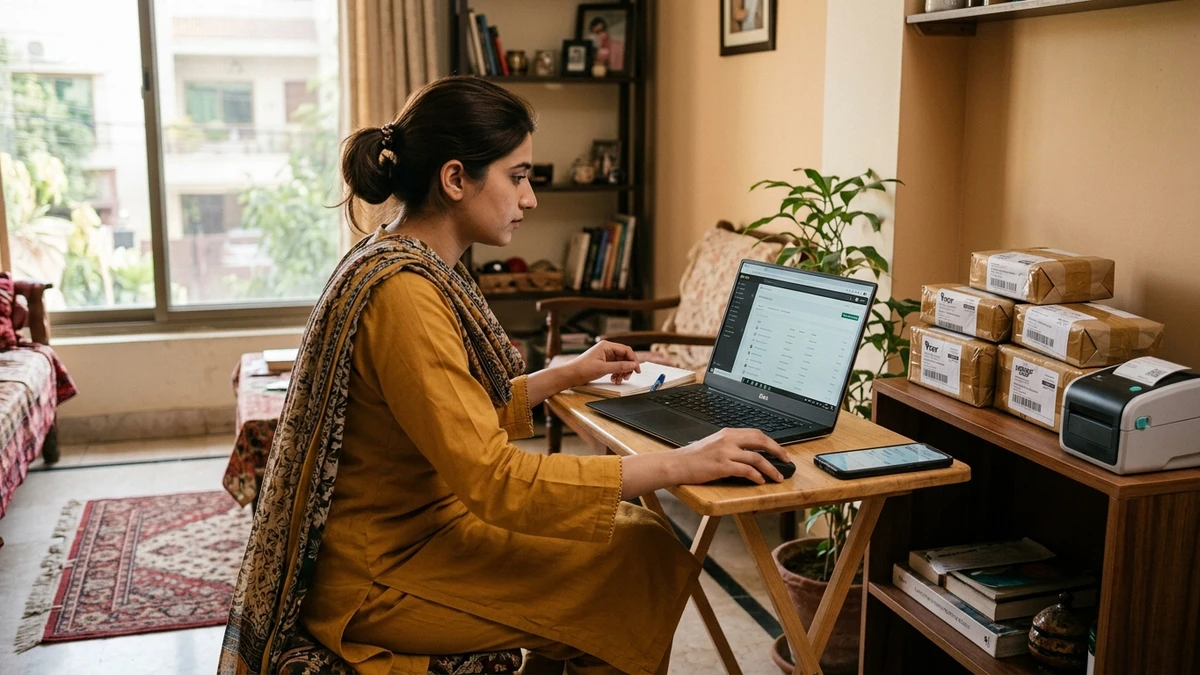
Most dropshipping guides on Google are written for Americans. They assume you have a Social Security Number, a Stripe account, and a PayPal balance sitting ready to go. This is especially relevant for drop shipping in pakistan.If you are in Pakistan, you hit a wall before you even get to product research.
The guides do not mention that Shopify Payments is unavailable here. They skip the PayPal problem entirely. They list Stripe as an option without noting it does not support Pakistani bank accounts. This is especially relevant for drop shipping in pakistan.You are left with a setup checklist that does not work in your country.
This guide is different. It solves the Pakistan-specific problems first, with legitimate fixes that thousands of Pakistani freelancers and store owners already use. This is especially relevant for drop shipping in pakistan.Then it walks you through launching a real Shopify dropshipping store, step by step, without illegal workarounds or unrealistic income promises.
Table of Contents
- What Dropshipping Actually Is
- Can a Pakistani Run a Real Shopify Store
- The 5 Pakistan-Specific Problems and Their Fixes
- 7-Step Launch Playbook for Pakistani Dropshippers
- Top 8 Dropshipping Suppliers Pakistanis Actually Use
- Pakistan vs USA Dropshipping – Where Should You Sell
- Realistic Year-1 Income Breakdown
- Mistakes That Killed 80% of Pakistani Dropshipping Stores
- How to Skip 6 Months of Trial and Error
- Frequently Asked Questions
What Dropshipping Actually Is
You list products in an online store. A customer orders. Your supplier ships directly to that customer. This is especially relevant for drop shipping in pakistan.You keep the difference between what the customer paid and what you paid the supplier.
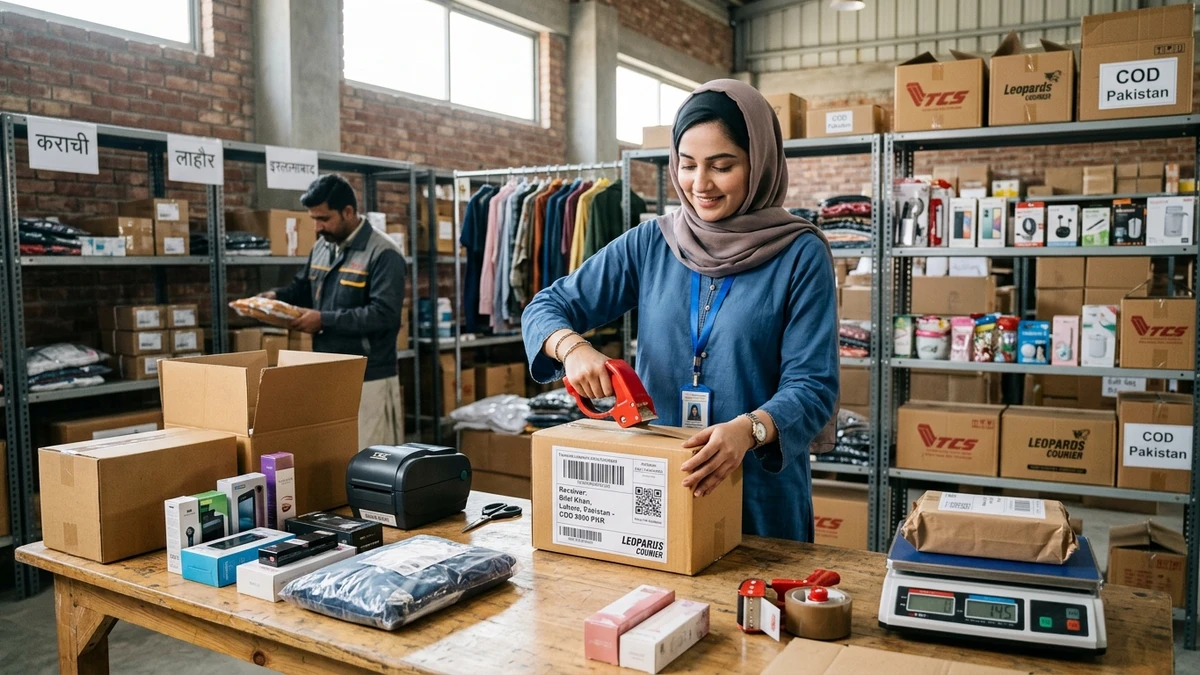
No warehouse. No inventory stacked in your bedroom. No upfront stock purchase. Your job is three things: build the store, pick the right products, and drive traffic through paid ads or organic content. That is the entire model.
This works particularly well for Pakistanis because startup costs are low, you can earn in USD without leaving your city, and you need no physical storefront or registered office. The infrastructure for earning internationally from Pakistan is already there. Hundreds of thousands of Pakistani freelancers on Fiverr and Upwork use the exact same payment rails you will use for dropshipping.
Can a Pakistani Run a Real Shopify Store
Yes, fully and legally. Here is what people get confused about: Shopify itself accepts Pakistani sign-ups without any issue. The limitation is Shopify Payments specifically, the platform's built-in payment processor. It is not available in Pakistan as of 2026. The platform works fine. The native payment gateway does not.
The legal path is straightforward. Register as a freelancer or sole proprietor in Pakistan. Open a Payoneer account to receive international earnings. Transfer to your Pakistani bank account. This is the same workflow used by hundreds of thousands of Pakistani freelancers, and it is accepted, documented, and tax-compliant.
The bigger opportunity is international. Selling to customers in the USA, UK, or Australia means card payments upfront, no Cash on Delivery complications, and USD revenue that converts well against the rupee.
The 5 Pakistan-Specific Problems and Their Fixes
This is the section most guides skip entirely. Here are the real blockers and their legitimate solutions.
Problem 1: No SSN for Shopify Payments
Shopify Payments requires a US Social Security Number or an equivalent tax ID from a supported country. Pakistan is not on that list. The fix is simple: do not use Shopify Payments at all.
Use 2Checkout (now operating as Verifone), Paddle, or local gateways like Paymob and XPay instead. All of these integrate with Shopify, accept Pakistani account holders, and process international card payments. Do not attempt to use a fake SSN or a fake US address. This violates Shopify's terms of service and results in a permanent account ban. There is no legal reason to take that risk when legitimate alternatives exist.
Problem 2: PayPal Not Available in Pakistan
PayPal does not support Pakistani bank accounts for receiving payments. The solution is legal and widely used: Payoneer and Wise both accept USD, connect to your payment gateway, and transfer funds to your Pakistani bank account without any legal issues. Payoneer is particularly common because it provides a virtual US bank account number, which some gateways require during setup.
Problem 3: Stripe Not Supported
Stripe does not support Pakistan for payouts. Same solution as above. Use 2Checkout or Paddle as your Shopify payment gateway and Payoneer to receive and forward your earnings. Both platforms have been used by Pakistani sellers for years and have clear documentation for this exact setup.
Problem 4: Customs and Shipping Friction When you sell internationally and your supplier ships from China, the goods go directly from the supplier to your customer in the USA or UK. Pakistani customs are not involved in that transaction at all. The friction is on delivery time, not customs.
Use ePacket shipping from AliExpress or CJ Dropshipping's supplier-direct shipping to bring international delivery times down to 10-15 days. For local Pakistan selling, TCS, Leopard Courier, and PostEx all support Cash on Delivery.
Problem 5: Receiving USD Earnings
Open a Payoneer account, connect it to your payment gateway (2Checkout or Paddle), and set up automatic transfers to your Pakistani bank. This is the standard, legal workflow. Payoneer generates earnings records you can use for tax purposes. It is the same system Pakistani freelancers use across every major international platform.
7-Step Launch Playbook for Pakistani Dropshippers
Step 1: Open a Shopify Partner Account (free)
Go to Shopify Partners and create a free account. This gives you access to development stores without paying anything upfront and lets you build and test before committing to a paid plan.
Step 2: Create a Development Store, Then Activate $1/Month
Build your store inside the Partner dashboard at zero cost. When you are ready to go live, activate Shopify's starter plan at $1/month for the first 3 months. After that, the Basic plan runs $39/month.
Step 3: Theme and Branding with Online Store 2.0
Pick the Dawn theme. It is free, fast, and built on Shopify's Online Store 2.0 framework. Set up your logo, brand colors, and product pages. Keep the design clean. Cluttered stores lose customers before they even read the product description.
Step 4: Import Products Automatically
Use DSers for AliExpress products (free plan available) or AutoDS for multi-supplier sourcing (starts at $26.90/month). Both apps handle automatic order fulfillment, price syncing, and inventory updates. No manual copy-pasting required.
Step 5: Connect a Pakistani-Friendly Payment Gateway
For international stores, connect 2Checkout or Paddle. For local Pakistan stores, Paymob and JazzCash both integrate with Shopify as of 2026. Match your gateway to your target market before you go live.
Step 6: Install Meta Pixel AND Conversions API
This is where most beginners leave serious money on the table. Installing the Meta Pixel alone is not enough. Since Apple's iOS privacy changes, the browser-based Pixel alone misses a significant portion of conversion events. The Conversions API runs server-side, capturing purchases and events the Pixel cannot see.
Set up the Conversions API through Shopify's Facebook and Instagram app rather than manually. Shopify handles the server-side event matching automatically, and this single setup difference can meaningfully reduce your cost per purchase once you are running at scale. Without both tools working together, your ad data is incomplete and you will make bad decisions about which ads to scale and which to cut.
Step 7: Launch Meta or TikTok Ads
Start with a $5-10/day budget per ad set. Run each ad set for 3-5 days before making decisions. Kill ad sets that do not produce add-to-carts or purchases. Scale the ones that do. TikTok ads perform well for visual products targeting younger audiences. Meta works across a wider demographic range and gives you more granular interest targeting.
Top 8 Dropshipping Suppliers Pakistanis Actually Use
| Supplier | Best For | Shipping Time | Notes |
|---|---|---|---|
| AliExpress | Wide product range | 10-25 days | Use ePacket or AliExpress Standard Shipping |
| CJ Dropshipping | Scaling winning products | 7-14 days | US/EU warehouses available |
| Daraz Wholesale | Local Pakistan selling | 2-5 days local | Thin margins, high COD returns |
| Faisalabad/Karachi Wholesalers | Local clothing/textiles | Variable | Best margins, manual coordination needed |
| Spocket | US/EU customer experience | 3-7 days | Starts at $39.99/month; higher product cost |
| Walmart Dropshipping | Advanced, US-targeted | 2-5 days | Requires US LLC or agent; year-2 strategy |
| Amazon Dropshipping | US-targeted, high volume | Prime-speed | Strict rules; treat as year-2 strategy |
| Printful | Custom branded merch | 5-10 days | Zero inventory risk; ships globally |
AliExpress is where most Pakistani dropshippers start because the product range is enormous and DSers makes order automation straightforward. CJ Dropshipping becomes the better choice once you have a winning product and need faster shipping to keep customers happy and chargebacks low.
Spocket costs more per unit but delivers in 3-7 days to US and UK customers, which dramatically reduces refund requests. Local suppliers in Faisalabad and Karachi are worth exploring for domestic selling. Pakistani clothing and textile wholesalers can offer margins no AliExpress seller can match, but you will need to manage logistics, photography, and supplier communication yourself.
Pakistan vs USA Dropshipping – Where Should You Sell
| Factor | Local Pakistan | International (USA/UK) |
|---|---|---|
| Margins | 10-20% typical | 30-60% achievable |
| Payment method | Cash on Delivery | Card upfront |
| Return rate | 20-30% COD returns | 5-10% typical |
| Competition | Heavy (Daraz dominates) | High but segmented |
| Income ceiling | Limited by PKR purchasing power | USD, scales faster |
The COD reality in Pakistan is rarely discussed honestly. When 20-30% of orders come back, you pay courier fees twice, wait for cash reconciliation from the courier, and watch your margins disappear. That cash sits with the courier for days or weeks before it reaches your account. It is not a reason to avoid local selling forever, but it is a serious reason not to start there.
Start with an international store targeting the USA or UK. Collect payments via 2Checkout or Paddle, receive earnings through Payoneer, transfer to your Pakistani bank. Once you have cash flow and systems running, you can layer a local store on top.
Realistic Year-1 Income Breakdown
Nobody in Pakistan should start a dropshipping business expecting money in week one. Here is what realistic actually looks like:
- Month 1-2: PKR 0. You are setting up the store, testing products, learning the ad platform, and losing some ad spend to bad product choices. This is normal and necessary.
- Month 3-6: PKR 30,000 to 150,000/month. You have found one or two products that convert. Ads are profitable. You are learning to scale.
- Month 6-12: PKR 100,000 to 500,000/month. You have a system. Winning products are scaled. You may be testing new niches or adding products.
- Year 2+: PKR 500,000+ per month is realistic for someone who treats this as a business, not a side experiment.
These are ranges, not guarantees. Results depend entirely on product selection, ad execution, and how fast you learn from bad data. The people who hit the upper end of those ranges are the ones who tracked their numbers, killed losing products quickly, and reinvested profits into scaling what worked.
Mistakes That Killed 80% of Pakistani Dropshipping Stores
Here is what nobody tells you until after you have already made the mistake:
- Picking a product they liked instead of one the market validated. Use Google Trends and check competitor ad libraries before building a store around any product.
- Skipping the Conversions API setup. Running ads with incomplete data is like navigating Lahore's ring road with half your windshield fogged up. You cannot see what is working.
- Targeting Pakistan with international store economics. COD return rates and Daraz's logistics advantage make this a bad starting point for a new store.
- Choosing AliExpress suppliers with 25-plus day shipping for US customers. Customers file disputes and chargebacks. Your merchant account gets flagged.
- Giving up after the first failed product. Most successful dropshipping stores found their winning product on the third or fourth attempt. Quitting after one loss means you never find out.
- Not tracking unit economics. Product cost plus ad spend plus gateway fees plus returns must leave a profit. Many stores run at a loss and call it "learning" for too long without adjusting.
Before you spend a rupee on ads, calculate your break-even ROAS. If your product costs $8, sells for $28, and your gateway takes 3.5%, you need to know the minimum revenue per ad dollar just to break even. Know that number before you launch, not after you have burned through your budget.
How to Skip 6 Months of Trial and Error
The steps in this guide are accurate. The problem is that reading about something and executing it profitably are two completely different things. Knowing you need to install the Conversions API is not the same as knowing how to read the data it produces and adjust your campaigns accordingly.
The gap that separates Pakistani dropshippers who make it from those who quit is not access to information. It is structured, practical training that covers operational details, ad account setup, supplier sourcing, and payment infrastructure in one place, with someone to answer questions when things break.
Skip the trial-and-error – our Shopify Store Creation course covers everything in this guide and the 50 things it doesn't.
Have a specific question about payment gateways, supplier selection, or ad setup right now? Ask our AI any Shopify question and get an answer without waiting.
For a full view of what hands-on Shopify training looks like, including live store builds, Meta Pixel and Conversions API setup, and supplier sourcing walkthroughs, browse all courses.
Frequently Asked Questions
How much money do I need to start dropshipping in Pakistan?
A realistic minimum is PKR 50,000 to 80,000. This covers Shopify at $1/month for the first 3 months, a domain at approximately $15/year, and $100-200 in initial ad spend for product testing. Going below this makes it very difficult to gather enough data to find a winning product before your budget runs out.
Which country should I target first for dropshipping from Pakistan?
The USA is the highest-volume market for English-language Shopify stores and offers the most ad data to work with. The UK and Australia are less competitive with similar purchasing power and are worth testing once you have a proven product. Start with one market before spreading across multiple.
Is there enough Pakistani customer demand for local dropshipping?
Demand exists. The problem is not demand, it is economics. Cash on Delivery return rates of 20-30%, Daraz's built-in audience and logistics advantage, and thin margins make local selling harder for beginners than selling internationally. Build your cash flow internationally first, then consider adding a local store once you have systems in place.
How do I get around the SSN requirement without using fake documents?
You do not need to get around it. Use 2Checkout or Paddle as your Shopify payment gateway instead of Shopify Payments. Both accept Pakistani account holders, both integrate directly with Shopify, and both are fully legitimate. Using a fake SSN or fake US address violates Shopify's terms of service and results in permanent account termination.
How long until I get my first sale from dropshipping in Pakistan?
With paid ads and a validated product, most stores see their first sale within 7 to 14 days of launching campaigns. Without ads, using organic content only, expect 2 to 3 months minimum before consistent traffic builds. The fastest path is paid ads with a small daily budget, rapid product testing, and cutting ad sets that do not produce results within 3 to 5 days.
Recommended For You
Ready to Master These Skills?
Shopify Store Creation Training Program
Master the Shopify Partner Ecosystem and build professional stores for clients. Start your Shopify freelancing career.
AI Automation Training Program
Build intelligent workflows with N8N, Make.com & Zapier. Connect apps, eliminate repetitive tasks, and deploy self-running AI agents.